Indoor activity
Tissue Paper Suncatcher
Layer colourful tissue paper squares onto sticky cling film, add a paper frame, and hang it in a window to create a glowing stained-glass effect that fills the room with coloured light!
Materials
- Cling Film
- Paper
- Scissors
- Tape
- Tissue Paper
Illustrated Steps
Lay the Base
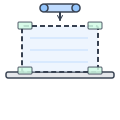
Tear off a 30 cm square of cling film and press the edges down flat on a table, sticky-side up. Tape the corners to stop it curling.
Arrange the Colours
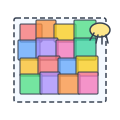
Tear tissue paper into 3–5 cm squares and press them onto the sticky cling film. Overlap colours to create new shades and cover every patch.
Add a Frame
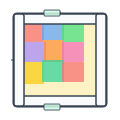
Fold a sheet of paper in quarters and cut a square from the open corner to create a frame. Lay it over the tissue layer and fold the cling film edges over to lock it in place.
Display It!
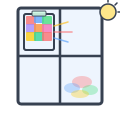
Tape your suncatcher to a sunny window. Watch the coloured light glow through the tissue paper and cast rainbow patches on the walls.
What You’ll Create
Make a beautiful stained-glass window effect using nothing but tissue paper and cling film! When you hang your suncatcher in a sunny window, the overlapping colours glow and mix together like magic. 🌈 It is a wonderfully calming craft that produces stunning results — and every suncatcher turns out completely unique.
Have fun!
- 🎨 Try a themed colour palette — all blues and purples for an ocean feel, or warm reds and oranges for a sunset.
- ✂️ Cut tissue paper into shapes like stars, hearts, or leaves instead of squares.
- 🔵 Layer three pieces of the same colour in one spot for a deep, rich shade.
- 🌟 Make a set of small suncatchers and hang them at different heights for a mobile effect.
Why It’s Amazing
- Colour Mixing: Layering translucent colours teaches colour theory in a hands-on, visual way that a paint palette cannot match. 🎨
- Fine Motor Skills: Tearing paper into small pieces and placing them precisely on the sticky film develops finger strength and pincer grip. ✂️
- Mindfulness: The slow, repetitive process of placing each piece is naturally calming — it is almost meditative for many children. 🧘
- Science: Translucency and light refraction become tangible concepts when coloured light visibly passes through the finished piece. 💡
Pro Tips
For ages 3–5: Pre-cut the tissue paper into squares and let the child place them freely without worrying about coverage. The less structured the better for this age.
For ages 5–8: Encourage intentional colour mixing — challenge them to make as many different colours as possible using just three base colours of tissue paper.
For ages 8+: Design a picture first (a flower, a sunset, a rainbow fish) and then build it up in tissue paper squares, working from a sketch outline. 🐟