Indoor activity
Tin Foil Sculpture Zoo
Scrunch, twist, and shape sheets of aluminium foil into a whole zoo of shiny animals — from a long-necked giraffe to a curly-tailed pig!
Materials
- Aluminium Foil
- Cardboard Boxes optional
- Markers optional
Illustrated Steps
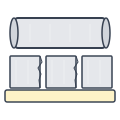
Tear Your Foil Sheets
Tear off several large sheets of aluminium foil about 30cm long. Lay them out shiny-side up — each one will become an animal!
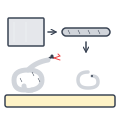
Start with a Simple Snake
Roll one sheet into a long sausage shape. Coil one end upward for the head and curl the tail into a spiral.
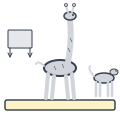
Level Up to Legged Animals
Scrunch the middle into a body, pull corners into four legs, and shape one end into a neck and head.
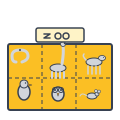
Build Your Zoo
Make as many animals as you can and arrange them on a cardboard base with drawn fence enclosures and labels!
What You’ll Create
Welcome to the shiniest zoo on Earth! 🦒✨ Your little sculptors will discover that ordinary aluminium foil is actually an incredible sculpting material — it bends, twists, scrunches, and holds its shape perfectly! Create a whole zoo of gleaming silver animals: a tall giraffe, a coiled snake, a four-legged dog, a round-bellied penguin — whatever creatures your imagination conjures!
Have fun!
- 🦁 Challenge each family member to sculpt the same animal — then compare the different versions!
- 🏷️ Write fact cards for each animal — where does it live? What does it eat?
- 📸 Photograph your zoo and make a “Zoo Guide” booklet!
- 🌍 Organise your animals by continent — which ones live in Africa? Which in Antarctica?
Why It’s Amazing
3D Spatial Thinking: Transforming a flat sheet into a standing 3D creature develops spatial reasoning and mental rotation skills. 🧠
Fine Motor Strength: Scrunching, pinching, and shaping foil builds excellent hand strength and finger dexterity. 💪
Iterative Design: When a leg breaks off or a neck flops, children learn to problem-solve and rebuild — real engineering! 🔧
Animal Knowledge: Studying animal shapes to sculpt them builds observation skills and zoological knowledge. 🦒
Pro Tips
For ages 3–5: Help them with the basic body shape. Focus on simple animals (snake, snail, caterpillar). The scrunching itself is the main fine motor benefit at this age.
For ages 5–8: Encourage independent sculpting. Start with the snake tutorial, then challenge them to figure out a four-legged animal on their own before showing them.
For ages 8–12: Challenge them to add detail: texture lines scored with a toothpick, twisted tails, open mouths. Can they sculpt a person? A dinosaur? A dragon?
Secret Pro Move: After sculpting, lightly brush poster paint onto the foil — the paint sits on the bumps and ridges but not the creases, creating an amazingly textured, almost antique-bronze look! 🎨