Outdoor activity
Tin Can Stilts
Transform two tin cans into walking stilts with string handles — decorate them, step up, and stomp around the garden like a giant!
Materials
- Markers optional
- Scissors
- String
- Tin Cans
Illustrated Steps
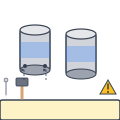
Prepare the Cans
Clean two matching tin cans. An adult pokes two holes near the bottom of each can for the string.
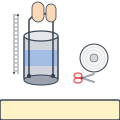
Thread the String
Cut long strings, thread through the holes, and tie into loop handles that reach up to standing height.
Decorate Your Stilts
Use markers and stickers to decorate the cans — monster feet, rainbows, or robot panels!

Walk Like a Giant
Step onto the cans, hold strings tight, and walk! Keep the strings taut for balance. Stomp!

What You’ll Create
Fee-fi-fo-fum! 🦶 Your little giants will make their own walking stilts from two tin cans and string! Stand on the upturned cans, hold the strings tight, and clonk-clonk-clonk around the garden feeling metres taller than usual. It’s a classic childhood toy that’s been delighting kids for generations — and it’s brilliant for balance and coordination!
Have fun!
- 🏁 Set up an obstacle course to navigate on your stilts!
- 📏 Measure how tall you are on stilts vs without — how much taller?
- 🎪 Put on a circus show with stilts, juggling, and balancing acts!
- 🦕 Pretend you’re a dinosaur stomping through the jungle!
Why It’s Amazing
Balance and Coordination: Walking on stilts requires constant adjustment and core engagement — it’s a full-body balance challenge that builds physical confidence. 🤸
Gross Motor Development: The stomping, stepping, and coordinating hands with feet develops large muscle groups and bilateral coordination. 💪
Engineering Understanding: Children see how the string-and-can mechanism works — tension keeps them balanced. A simple machine in action! ⚙️
Persistence and Grit: Nobody walks perfectly on stilts the first time! Learning to fall, get back up, and try again builds resilience and determination. 🧠
Pro Tips
For ages 4–6: Hold their hands while they practice. Use smaller cans (like tuna cans) which are lower to the ground and less scary. Short distances on grass (softer falls!) are perfect. Celebrate every step!
For ages 6–9: Let them find their own balance. Challenge them to walk further each time — set distance markers. Race against a sibling or friend. Try walking on different surfaces (grass vs concrete — which is easier?).
For ages 9–12: Challenge them to build taller stilts using larger paint cans or buckets for a bigger challenge. Can they walk backwards? Sideways? Set up a timed obstacle course and try to beat their own record.
Secret Pro Move: Wrap duct tape around the rims of the cans for extra grip — it stops feet from sliding off and makes a satisfying stompy sound on hard surfaces! 🎯