Indoor activity
Seed-in-a-Bag Windowsill Garden
Grow a bean seed in a clear zip-lock bag taped to a sunny window and watch roots and shoots appear day by day!
Materials
- Bean Seeds
- Cotton Wool
- Markers
- Paper
- Pen
- Tape
- Zip-lock Bag
Illustrated Steps
Soak the Seeds
Drop bean seeds into a cup of water and leave overnight. Swollen seeds germinate much faster than dry ones.

Prepare the Cotton Wool Bed
Dampen cotton wool balls until moist but not dripping, then press them into the bottom of a zip-lock bag to form a soft pad.

Place the Seed
Press one soaked seed against the front of the bag halfway up, resting on the cotton wool. Seal the bag with a small air bubble inside.

Tape It to the Window
Stick the sealed bag to a sunny window with tape so the seed is visible from inside. Cotton wool pad must touch the bottom.

Label and Start Your Journal
Write today's date on the bag with a marker and start a seed journal — draw the seed and note what you see.

Watch and Record Daily
Check each day: add water drops if cotton wool dries out. Draw the root and shoot growth in your journal every morning.
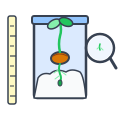
What You’ll Create
You and your child will turn a simple zip-lock bag, some cotton wool, and a bean seed into a living science experiment right on your windowsill! 🌱✨ Over the next 5–10 days you’ll watch the seed crack open, send roots downward, and push a green shoot upward — all visible through the bag. It’s one of those magical moments where real biology happens right in front of your eyes!
Have fun!
- 🌿 Once the shoot is 5 cm tall, transfer the seedling to a pot of soil and keep growing it!
- 📏 Measure the root length each day with a ruler and make a bar chart of its growth.
- 🔍 Use a magnifying glass to look closely at the tiny root hairs — they look like white fuzz!
- 🤔 Try one seed in a dark cupboard and one on the window — which grows faster?
- 📸 Take a photo every day at the same time and make a flipbook of the seed growing.
Why It’s Amazing
- Biology & Science: Children directly observe germination, root tropism, and phototropism — concepts usually reserved for school textbooks. 🔬
- Observation Skills: Daily journalling builds the habit of careful, methodical recording — a core scientific skill. 📓
- Patience & Responsibility: Caring for a living thing across multiple days teaches delayed gratification and nurturing. 🌱
- Maths Integration: Measuring root length day-by-day and plotting a bar chart connects science to real data and arithmetic. 📊
Pro Tips
For ages 3–5: Focus on the magic — “look, it’s drinking the water and waking up!” Let them do the watering and drawing. Skip the journal and just talk about what you see.
For ages 5–8: Introduce the words germination, root, shoot, and seed coat. Encourage daily drawings and written observations. Try two bags with different bean types to compare.
For ages 8–12: Challenge them to design a proper experiment — same seed type, one in sunlight, one in shade, one with warm water, one cold. Make a hypothesis, record results, and draw conclusions. ⚠️ Remind them the cotton wool must stay damp but never waterlogged — mould will grow if it is too wet.