Outdoor activity
Sandwich Bag Kite
Transform a zip-lock bag and straws into a real flying kite — then head outside and let it soar in the wind!
Materials
- Markers optional
- Stickers optional
- Straws
- String
- Tape
- Zip-lock Bag
Illustrated Steps
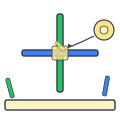
Create the Kite Frame
Arrange two straws in a cross and tape them tightly where they meet to form the kite skeleton.
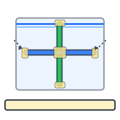
Attach the Sail
Lay the straw cross on a flat zip-lock bag and tape each straw end to the bag.
Decorate and Add the Line
Draw colourful designs with markers, add stickers, then tie a long string through the centre.

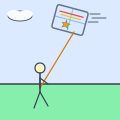
Fly Your Kite!
Head outside, run into the wind, and let out string as the kite catches air and climbs!
What You’ll Create
Up, up, and away! 🪁 Your little aviators will build a real working kite from everyday kitchen items — a zip-lock bag for the sail, straws for the frame, and string for the line. It’s light enough to fly in even the gentlest breeze, and because zip-lock bags are transparent, decorating them with markers creates stunning stained-glass effects in the sunlight!
Have fun!
- 🏃 Have a kite-flying race — whose kite goes highest?
- 🎀 Add ribbon tails from the bottom for a streaming effect!
- 🌈 Make several kites in different colours and fly them together!
- 📏 See how long a string you can use before the kite gets too heavy!
Why It’s Amazing
Aerodynamics: Children discover how wind creates lift, how angle affects flight, and why shape matters — real aerospace engineering! ✈️
Weather Awareness: Flying kites connects children to wind direction, speed, and weather patterns in a tangible way. 🌤️
Problem-Solving: When the kite doesn’t fly well, children must diagnose the issue (too heavy? wrong angle? not enough wind?) and adjust. 🔧
Physical Activity: Running, controlling the string, and tracking the kite overhead provides fantastic outdoor exercise and coordination. 🏃
Pro Tips
For ages 3–5: Build the kite for them and let them decorate it. Hold their hand while flying — they can hold the string while you run. Focus on the joy of watching it catch the wind.
For ages 5–8: Let them help with construction. Teach them to face into the wind and let out string gradually. Challenge them to keep the kite up for a count of 30.
For ages 8–12: Let them build independently and experiment with different designs — diamond, box, delta shapes. Introduce the concept of a bridle (two strings from the kite meeting the flying line) for more stable flight.
Secret Pro Move: Add a tail made from strips of bin liner tied end-to-end — about 1 metre long. The tail adds drag that stabilises the kite and prevents spinning. Plus it looks absolutely spectacular streaming behind! 🎉