Indoor activity
Rainbow Salt Jar
Layer vibrant coloured salt in a glass jar to create a stunning striped rainbow display piece — no two jars are ever the same!
Materials
- Food Colouring
- Glass Jar
- Paper Plates
- Salt
- Spoon
- Zip-lock Bag
Illustrated Steps
Mix the Coloured Salt
Pour salt into zip-lock bags, add food colouring, knead until evenly coloured, then spread on plates to dry. Make 4–5 colours.
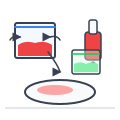
Prepare the Jar
Clean and dry the glass jar thoroughly. Stand it upright for flat layers, or tilt it against a book for wavy diagonal stripes.

Layer the Colours
Spoon each colour gently into the jar one at a time, building 1–2 cm layers without shaking. Fill right to the top.
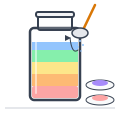
Seal and Display
Screw the lid on tightly and optionally tape the edge. The coloured layers stay locked in place as long as the jar stays sealed.
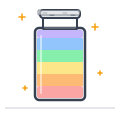
What You’ll Create
You’ll transform plain table salt into a rainbow of colours and carefully layer them inside a glass jar to create a beautiful striped display piece! 🌈 Each layer is a different colour, and tilting the jar as you pour creates wavy, mountain-like patterns. Seal it up and you have a gorgeous desk decoration or handmade gift.
Have fun!
- 🎨 Try making an ombré jar using light-to-dark shades of a single colour
- 🌍 Create a “sunset jar” with red, orange, yellow, and purple layers
- 🎁 Make several as gifts — tie a ribbon around the lid for a finishing touch
- 🔬 Experiment with tilting the jar at different angles for each layer to get zigzag patterns
Why It’s Amazing
- Colour Mixing: Children learn that colours can be mixed into granular materials, and discover how primary colours combine to make new shades.
- Fine Motor Precision: Spooning salt carefully into layers without disturbing previous ones develops hand control and patience.
- Pattern & Sequence: Planning which colours go where builds early understanding of patterns, sequences, and visual design.
- Material Science: Observing how dye bonds to salt crystals introduces the concept of absorption at a simple level.
Pro Tips
For ages 3–5: Pre-mix the coloured salt so it’s ready to spoon. Use a wide-mouth jar (easier to aim) and keep layers thick — about 2 cm each. Help them hold the spoon steady.
For ages 5–8: Let them mix their own colours. Encourage planning the colour order on paper first. Show them the tilting trick for diagonal stripes.
For ages 8–12: Challenge them to create a specific pattern (flag stripes, sunset gradient). Introduce the idea of complementary colours. Try using fine sand instead of salt for a different texture.