Indoor activity
Popsicle Stick Raft
Build a miniature raft from popsicle sticks and string, add a paper sail, then test if it floats in a bowl of water!
Materials
- Large Bowl
- Markers optional
- Paper
- Popsicle Sticks
- PVA Glue
- String
- Tape
Illustrated Steps
Build the Raft Base
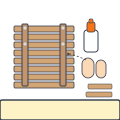
Line up popsicle sticks side by side. Glue cross-beams across them near each end.
Lash It Together
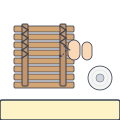
Wrap string around the joints, weaving over and under. Tie tight knots for strength.
Add a Sail
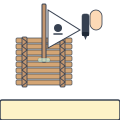
Thread a paper sail onto a stick mast. Attach to the centre of the raft. Decorate!
Launch and Test
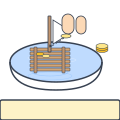
Float your raft in a bowl of water. Add cargo to test — how much can it hold?
What You’ll Create
Set sail! ⛵ Your young shipbuilders will construct a miniature raft from popsicle sticks lashed together with string, add a paper sail on a stick mast, and then test whether it actually floats! Launch it in a bowl of water and watch it bob on the surface. Will it hold a tiny passenger? How much cargo can it carry before it sinks? It’s hands-on engineering that gets wet!
Have fun!
- 🏋️ Test how many coins your raft can carry — keep a tally!
- 🌬️ Race rafts across a bath by blowing through straws!
- 🧸 Add a tiny toy passenger and build a cabin from more sticks!
- 📊 Compare raft designs — wide vs narrow, more sticks vs fewer!
Why It’s Amazing
Buoyancy Science: Children learn why some things float and others sink — surface area, weight distribution, and displacement become tangible concepts. 🔬
Engineering Skills: Building a raft that actually holds together in water requires planning, construction techniques, and iterative improvement. ⚙️
Problem-Solving: When the first raft sinks or tips, children naturally investigate why and redesign — real engineering thinking in action. 🧠
Historical Connection: Rafts are one of humanity’s oldest inventions! Children connect with the same challenges ancient people faced crossing rivers and seas. 📖
Pro Tips
For ages 4–6: Pre-glue the base and let it dry before the session. Let them help with the string lashing and focus on the exciting parts — decorating the sail and the float test! The suspense of “will it float?” is magical at this age.
For ages 6–9: Let them build from scratch. Encourage experimentation — what if you use more sticks? What if you add sides? Challenge them to carry the heaviest load possible. Keep a data table of results.
For ages 9–12: Introduce engineering constraints — use exactly 12 sticks and 30cm of string. Who can build the raft that carries the most weight? Research real raft-building techniques (log cabin style, outrigger design). Calculate the weight-to-area ratio.
Secret Pro Move: Rub the bottom of the raft lightly with a candle or wax crayon before launching — the thin wax coating makes the wood more water-resistant and your raft will float much longer without getting waterlogged! 🎯