Indoor activity
Popsicle Stick Harmonica
Sandwich a paper strip between two popsicle sticks, wrap rubber bands at each end — blow through the gap and hear it buzz and hum!
Materials
- Paper
- Popsicle Sticks
- Rubber Bands
- Scissors
Illustrated Steps
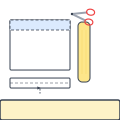
Cut the Paper Strip
Cut a strip of paper the same size as a popsicle stick and fold it in half lengthwise.
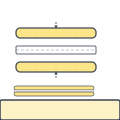
Make the Sandwich
Place the paper strip between two popsicle sticks, edges aligned like a sandwich.
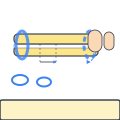
Wrap the Rubber Bands
Stretch rubber bands tightly around each end to hold the sticks together.
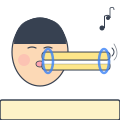
Play Your Harmonica
Hold it to your lips and blow through the middle gap — the paper vibrates and buzzes!
What You’ll Create
Make some noise! 🎵 Your little musicians will build a buzzing harmonica from just two popsicle sticks, rubber bands, and a strip of paper. Sandwich the paper between the sticks, wrap rubber bands tightly at each end to hold it together, then blow through the gap — the paper vibrates and makes an amazing buzzy, reedy sound! Change the pitch by squeezing tighter or looser.
Have fun!
- 🎼 Make several harmonicas and try to play a simple tune!
- 🔬 Experiment with different paper thicknesses — does tissue paper sound different from card?
- 🎸 Start a band — combine with a rubber band guitar and water xylophone!
- 📖 Learn how real harmonicas work — metal reeds vibrate just like your paper strip!
Why It’s Amazing
Sound Science: Children discover that vibrating materials create sound — the fundamental physics principle behind all musical instruments. 🔬
Cause & Effect: Blowing harder = louder, squeezing tighter = higher pitch. Direct experimentation with variables builds scientific thinking. 🧠
Engineering Skills: Building a functional instrument from simple materials introduces basic engineering — structure, tension, and assembly. 🏗️
Musical Exploration: A working instrument in minutes! Encourages rhythm, experimentation, and an interest in music-making. 🎵
Pro Tips
For ages 3–5: Pre-cut the paper strip and help them wrap the rubber bands (these need to be tight). The blowing technique takes a little practice — show them how to blow gently through the gap.
For ages 5–8: Let them cut and fold their own paper strip. Challenge them to find the sweet spot — the exact tightness that makes the best sound. Try different paper types.
For ages 8–12: Experiment systematically — test wax paper, tissue paper, card stock, and regular paper. Record which makes the highest/lowest/loudest sound. Research how reed instruments (clarinet, oboe) use the same vibration principle.
Secret Pro Move: Cut two small pieces of straw (about 1 cm each) and wedge them between the sticks near each rubber band — these spacers create a more consistent gap and dramatically improve the sound quality! 🎯