Indoor activity
Pasta Skeleton
Use different pasta shapes to build a skeleton on paper — tube pasta for bones, bow ties for the ribcage, and shells for the skull!
Materials
- Markers
- Paper
- PVA Glue
- Tube Pasta
- Uncooked Spaghetti
Illustrated Steps
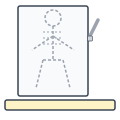
Draw the Body Outline
Draw a stick-figure outline on large paper — a circle for the head, lines for spine, arms, and legs.
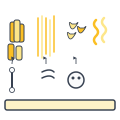
Sort Your Pasta Bones
Gather different pasta shapes and decide which ones represent which bones — tubes for arms, spaghetti for ribs!
Glue the Skeleton Together
Spread PVA glue along the outline and press pasta pieces down, working from the spine outward.

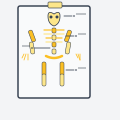
Label and Display
Draw arrows and label the bones with their names. Hang your skeleton on the wall!
What You’ll Create
Dem bones, dem bones! 💀 Your little anatomists will use different pasta shapes to build a brilliant skeleton on paper — tube pasta (penne or rigatoni) for the long bones, uncooked spaghetti for ribs and fingers, and other shapes for the skull, hips, and joints. Glue it all down with PVA glue and you have an amazing 3D anatomy art piece!
Have fun!
- 🦕 Make a dinosaur skeleton instead — longer neck, big tail, tiny arms!
- 🎃 Paint the pasta white and the paper black for a spooky Halloween skeleton!
- 📏 Make a life-size skeleton using a huge roll of paper on the floor!
- 🔬 Look up a real skeleton diagram and see how accurate yours is!
Why It’s Amazing
Anatomy Introduction: Children learn about the human skeleton — where bones are, what they look like, and how they connect. 🦴
Shape Recognition: Matching pasta shapes to bone shapes requires comparing, categorising, and creative thinking. 🧠
Fine Motor Skills: Placing small pasta pieces precisely and snapping spaghetti develops finger control and dexterity. ✋
Art & Science Fusion: This activity beautifully combines scientific learning with creative art — STEAM at its best! 🎨
Pro Tips
For ages 3–5: Pre-draw the outline and pre-sort the pasta. Let them glue the big pieces (legs, arms) while you handle the fiddly bits. Focus on the fun of building rather than anatomical accuracy.
For ages 5–8: Let them sort the pasta and decide which shapes go where. Introduce the names of major bones (skull, spine, ribs, femur). Challenge them to count how many ribs they give their skeleton.
For ages 8–12: Research the actual skeleton first and try for accuracy — 12 pairs of ribs, 5 lumbar vertebrae, etc. Introduce the concept of joints and how different pasta shapes can represent ball-and-socket vs. hinge joints. Make it anatomically impressive!
Secret Pro Move: Spray the finished skeleton with clear lacquer or hairspray — it seals the pasta in place permanently and gives it a lovely sheen. The skeleton will last for years! ✨