Indoor activity
Paper Plate Turtle
Turn a paper plate into an adorable turtle with a colourful painted shell, paper legs, and googly eyes — perfect for little animal lovers!
Materials
- Markers
- Paper
- Paper Plates
- Poster Paint
- PVA Glue
- Scissors
- Spray Bottle optional
Illustrated Steps
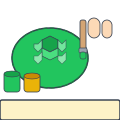
Paint the Shell
Flip a paper plate upside down and paint a colourful shell pattern with hexagons, swirls, or circles.
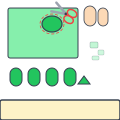
Cut Out Body Parts
Cut four stubby legs, an oval head, and a pointed tail from green paper.
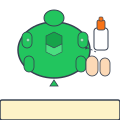
Assemble the Turtle
Glue legs under the plate edges, the head at one end, and the tail at the other.
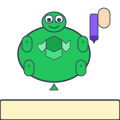
Add the Face
Stick on googly eyes and draw a happy mouth with markers. Your turtle is complete!
What You’ll Create
Slow and steady wins the race! 🐢 Your little crafters will transform a paper plate into the cutest turtle ever — paint a colourful shell pattern, add paper legs and a head, stick on googly eyes, and you’ve got a friendly turtle ready for adventures! The dome shape of the plate makes a perfect rounded shell.
Have fun!
- 🏠 Build a shoebox habitat with rocks, leaves, and blue paper for a pond!
- 👨👩👧👦 Make a whole turtle family — a big parent and tiny baby turtles!
- 📖 Read a turtle story and act it out with your turtle puppet!
- 🐚 Glue real small shells onto the plate for a textured 3D shell!
Why It’s Amazing
Fine Motor Development: Cutting curves, gluing small parts, and painting patterns all build the hand control needed for writing. ✋
Nature Connection: Learning about turtle shells, how they’re shaped, and why turtles carry their homes introduces real biology in a hands-on way. 🌿
Creative Expression: Designing a unique shell pattern encourages artistic decision-making — colour choices, pattern styles, and personalisation. 🎨
Imaginative Play: The finished turtle becomes a character for storytelling, pretend play, and creative scenarios. 🧠
Pro Tips
For ages 3–5: Pre-cut the legs, head, and tail shapes. Let them focus on painting the shell (the most satisfying part!) and sticking on googly eyes. Simple dot patterns work beautifully for young painters.
For ages 5–8: Let them cut their own body parts and plan the shell pattern before painting. Talk about real turtle shells — why are they shaped that way? Can they recreate a realistic pattern?
For ages 8–12: Challenge them to research real turtle species and recreate accurate markings. Can they make the legs articulated with split pins so the turtle can “walk”? Try layering tissue paper on the shell for a mosaic effect.
Secret Pro Move: Before painting, crumple the paper plate gently and smooth it back out — this creates a subtle wrinkled texture that looks amazingly like a real turtle shell when painted over! 🎯