Indoor activity
Paper Plate Mask
Transform a paper plate into an amazing animal or character mask — cut out eye holes, add features with markers and paper, then wear it for imaginative play!
Materials
- Markers
- Paper
- Paper Plates
- PVA Glue
- Scissors
- String
Illustrated Steps
Plan Your Character
Hold the plate to your face, mark eye positions, and sketch your character's features.

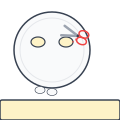
Cut the Eye Holes
Carefully cut out eye holes big enough to see through. Check they line up with your eyes.
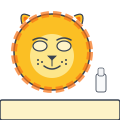
Add Features and Colour
Draw and colour the face. Cut ears, beaks, or horns from paper and glue them on.
Attach the Strap and Wear
Thread string through holes on each side, knot it, and wear your mask for dramatic play!

What You’ll Create
Who will you become today? 🎭 Your little artists will transform a plain paper plate into an incredible wearable mask! Cut out eye holes, add ears, a nose, whiskers, feathers, or whatever features bring your character to life using markers, coloured paper, and PVA glue. Then attach string or a rubber band to hold it on, and let the dramatic play begin — roar like a lion, hoot like an owl, or invent a totally new creature!
Have fun!
- 🦊 Make a whole set of woodland animal masks and put on a play!
- 🦸 Create your own superhero mask with a cool name and backstory!
- 😱 Make spooky masks for Halloween — vampires, ghosts, and monsters!
- 👪 Have each family member make a mask and perform a short skit!
Why It’s Amazing
Dramatic Play: Wearing a mask transforms a child into a character, igniting imaginative storytelling and role-play adventures. 🎭
Design Thinking: Planning what a face looks like, which features to include, and how to construct them develops spatial reasoning and problem-solving. 🧠
Fine Motor Skills: Cutting, drawing details, and gluing small pieces onto the curved plate surface develops precision and dexterity. ✋
Self-Expression: Choosing a character — or inventing one — gives children a safe way to explore different identities and emotions. 💫
Pro Tips
For ages 3–5: An adult should cut the eye holes and poke the strap holes. Keep designs simple — a basic cat face or bear. Pre-cut paper ears and let them focus on gluing and colouring. A headband-style strap (taped to a strip of card) can be easier than side strings.
For ages 5–8: Let them cut their own eye holes (with supervision). Encourage adding 3D elements — folded paper ears, a cardboard tube beak, cotton wool eyebrows. Talk about symmetry — matching both sides of the face.
For ages 8–12: Challenge them to create detailed, realistic masks. Layer tissue paper for texture, add pipe cleaners for whiskers or antennae. Research traditional masks from different cultures (Japanese Noh, Venetian, African ceremonial). Create a whole mask collection!
Secret Pro Move: For masks that really pop, paint the plate with a base colour of poster paint first and let it dry completely before adding details. The paint covers the paper plate texture and gives a much more polished finish than markers alone! 🖌️