Indoor activity
Paper Plate Ladybird
Paint a paper plate red, fold it in half for wings, add black spots, pipe cleaner antennae, and googly eyes — a cheerful bug to keep!
Materials
- Flat Paintbrush
- Googly Eyes
- Markers
- Paper Plates
- Pipe Cleaners
- Poster Paint
- Scissors
- Tape
Illustrated Steps
Paint the Plate
Paint the bottom of a paper plate bright red and let it dry completely.

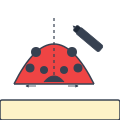
Add Spots and Head
Fold in half, paint a black head, and add symmetrical black spots on each wing.
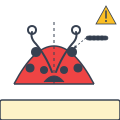
Attach Antennae
Poke pipe cleaners through the head and curl the ends into spirals.
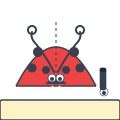
Add the Face
Stick on googly eyes, draw a smile, and stand your ladybird up!
What You’ll Create
Buzz into nature! 🐞 Your little entomologists will transform a paper plate into a bright ladybird with red wings, black spots, curly pipe cleaner antennae, and big googly eyes. Fold the plate in half for a 3D body, paint it bold red, add symmetrical spots, and attach wobbly antennae — it’s a charming bug that looks ready to fly away home!
Have fun!
- 🌿 Make a garden scene — add paper flowers and leaves for your ladybird to explore!
- 🔢 Count the spots — real ladybirds have different numbers! How many does yours have?
- 📖 Learn ladybird facts — they eat aphids and help gardens grow!
- 👨👩👧👦 Make a whole ladybird family — big ones and tiny babies!
Why It’s Amazing
Symmetry Skills: Placing matching spots on each wing teaches bilateral symmetry — a key maths concept that children can see and touch. 🔢
Fine Motor Development: Folding plates, painting spots, curling pipe cleaners, and placing eyes all build hand control and dexterity. ✋
Nature Connection: A gateway to learning about insects — their body parts (head, thorax, abdomen), lifecycles, and role in the garden ecosystem. 🌿
3D Construction: Folding a flat plate into a standing creature teaches basic engineering — how flat materials become 3D structures. 🔬
Pro Tips
For ages 3–5: Pre-fold the plate and paint the head black. Let them paint the red and add spots with finger dabs. Stick on the eyes — the wobbly eyes are the best part!
For ages 5–8: Let them do everything independently. Challenge them to make the spots symmetrical. Show them how to curl the pipe cleaner antennae tightly.
For ages 8–12: Research real ladybird species (seven-spot, two-spot, harlequin). Create an accurate replica with the correct number and pattern of spots. Add legs made from pipe cleaners.
Secret Pro Move: Before folding, slightly bend the plate so it curves naturally — this creates a more realistic rounded body shape that stands up better! 🎯