Indoor activity
Paper Plate Jellyfish
Paint a paper plate, add googly eyes and long tissue-paper tentacles, then hang your wobbly jellyfish up to float in the breeze!
Materials
- Flat Paintbrush
- Googly Eyes
- Paper Plates
- Poster Paint
- PVA Glue
- Scissors
- String
- Tape
- Tissue Paper
Illustrated Steps
Paint the Body
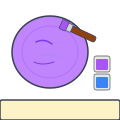
Paint one side of a paper plate in jellyfish colours — purples, blues, or pinks. Let dry.
Make the Tentacles
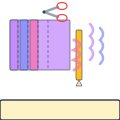
Cut tissue paper into long colourful strips and curl them around a pencil for extra wobble.
Attach the Tentacles
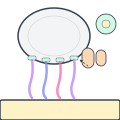
Tape tissue paper strips evenly along the underside edge of the plate so they dangle freely.
Add Face and Hang
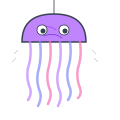
Stick on googly eyes, thread string through the top, and hang your jellyfish up to float!
What You’ll Create
An underwater friend that wobbles in the wind! 🪼 Your little marine biologists will transform a paper plate into a colourful jellyfish by painting it, adding googly eyes for personality, and attaching long, curly tissue paper tentacles that sway and dance when you hang it up. A stunning ceiling or doorway decoration!
Have fun!
- 🌊 Make a whole school of jellyfish in different colours and sizes!
- ✨ Add glitter to the wet paint for a sparkly ocean effect!
- 🐙 Add extra-long tentacles and short ones mixed together for a realistic look!
- 📖 Learn about real jellyfish — they have no brain, no heart, and are 95% water!
Why It’s Amazing
Marine Biology: Creating jellyfish introduces ocean life, invertebrate anatomy, and how tentacles work for catching food. 🌊
Fine Motor Skills: Cutting long thin strips, twisting tissue paper, and threading string all build hand dexterity and control. ✋
Colour Mixing: Layering translucent tissue paper and painting with wet media teaches how colours blend and layer. 🎨
Cause and Effect: Hanging the jellyfish and watching tentacles move in air currents demonstrates how air movement creates motion. 💨
Pro Tips
For ages 3–5: Pre-cut the tissue paper strips. Let them paint the plate and stick on eyes and tentacles. The goopier the glue, the better — they’ll love it!
For ages 5–8: Let them cut their own strips and experiment with curling techniques. Try mixing paint colours directly on the plate for a marbled jellyfish effect.
For ages 8–12: Challenge them to create anatomically inspired jellyfish — research different species (moon jelly, lion’s mane, box jelly) and recreate their distinctive shapes and tentacle patterns. Add a bell-shaped dome by stapling the plate into a gentle curve.
Secret Pro Move: Fold the paper plate in half (painted side out) before attaching tentacles — this creates a natural dome shape that looks much more like a real jellyfish bell than a flat plate! 🎯