Indoor activity
Paper Plate Fish
Cut a wedge from a paper plate for the mouth, reattach it as the tail, then paint colourful scales and add a googly eye for a fantastic fish!
Materials
- Googly Eyes
- Markers optional
- Paper Plates
- Poster Paint
- PVA Glue
- Scissors
- Tissue Paper optional
Illustrated Steps
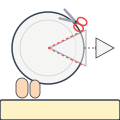
Cut the Mouth and Tail
Cut a triangle wedge from one side of a paper plate — this is the mouth. Save the wedge for the tail!
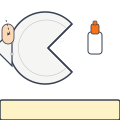
Attach the Tail
Flip the wedge and glue it to the opposite side, pointing outward. Mouth on one end, tail on the other!
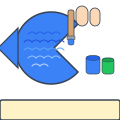
Paint the Scales
Paint a base colour, then add overlapping curved lines for scales in blues, greens, and purples.
Add Details
Stick on a googly eye, glue tissue paper fins, and draw a smile and gill lines!
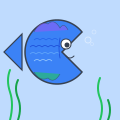
What You’ll Create
Splish splash! 🐟 Your little ocean lovers will transform a paper plate into a fabulous fish with a simple, clever trick — cut a triangle wedge out for the mouth, then flip it around and glue it on the back as the tail! Paint on bright, overlapping scales, add tissue paper fin details, and stick on a googly eye for a fish that looks ready to swim away!
Have fun!
- 🌊 Make a whole school of fish in different colours and sizes!
- 🎣 Attach string and hang them from the ceiling as a mobile!
- 📖 Learn about real fish species and try to recreate their patterns!
- 🐙 Make other sea creatures — an octopus, starfish, or jellyfish!
Why It’s Amazing
Spatial Reasoning: The “cut the mouth, make the tail” trick teaches children how shapes can be reused and repositioned — a foundational geometry concept. 📐
Colour Mixing: Painting overlapping scales in different shades introduces colour blending and the concept of layering from dark to light. 🎨
Marine Biology: A wonderful starting point to learn about different fish species, ocean habitats, and underwater ecosystems. 🐠
Fine Motor Skills: Cutting curves, painting small scale patterns, and placing details precisely all develop hand dexterity. ✋
Pro Tips
For ages 3–5: Pre-cut the mouth wedge. Let them glue the tail on and focus on painting — simple dot or finger-paint scales work beautifully! The googly eye is the best part at this age.
For ages 5–8: Let them cut their own wedge and learn the clever mouth-to-tail trick. Show them how to paint scales in rows using a round brush or sponge. Name their fish and write a story about it!
For ages 8–12: Challenge them to create a realistic fish — research a specific species and match the colours and patterns. Can they add 3D fins made from folded paper? Create a whole underwater scene with seaweed, coral, and other creatures.
Secret Pro Move: Use a bottle cap dipped in paint to stamp perfect scale circles — it’s much faster than painting each one and creates a beautiful, even scale pattern! 🎯