Indoor activity
Paper Plate Elephant
Fold and paint a paper plate into a big grey elephant with a curly trunk, floppy ears, and googly eyes — a safari favourite!
Materials
- Flat Paintbrush
- Googly Eyes
- Markers
- Paper
- Paper Plates
- Poster Paint
- PVA Glue
- Scissors
Illustrated Steps
Paint the Plate
Paint the front of a paper plate grey for the elephant's head. Let dry.

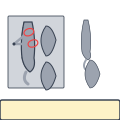
Cut Trunk and Ears
Cut a long curving trunk and two big C-shaped ears from grey paper.
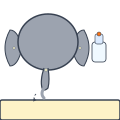
Assemble the Face
Glue the trunk to the centre-bottom and ears to the sides. Curl the trunk tip!
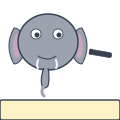
Add Details
Stick on googly eyes, draw a mouth with marker, and give your elephant a name!
What You’ll Create
A gentle giant made from a plate! 🐘 Your little artists will transform a paper plate into an adorable elephant by painting it grey, cutting out a long curly trunk and big floppy ears, and adding googly eyes for personality. Fold the trunk into a curl and your elephant is ready for a safari adventure!
Have fun!
- 🌍 Make a whole safari — add a lion, giraffe, and zebra from more plates!
- 🎭 Tape a popsicle stick to the back and use it as a puppet!
- 📖 Read a book about elephants and then make your own to match the story!
- 🐘 Make a baby elephant from a smaller plate and display them together!
Why It’s Amazing
Animal Anatomy: Building an elephant from parts teaches children to observe and replicate animal features — trunk, ears, tusks, proportions. 🐘
Colour Mixing: Creating the perfect elephant grey from white and black paint introduces colour theory and controlled mixing. 🎨
Spatial Reasoning: Positioning ears, trunk, and eyes in the right places on the plate develops understanding of symmetry and proportion. 📐
Fine Motor Skills: Cutting curved shapes, curling the trunk, and precise gluing all build hand dexterity. ✋
Pro Tips
For ages 3–5: Pre-cut the trunk and ears. Let them paint the plate and stick everything on. Focus on the painting and the googly eyes — those are the fun bits!
For ages 5–8: Let them cut their own shapes. Show them how to curl the trunk for a 3D effect. Challenge them to make the ears symmetrical.
For ages 8–12: Research real elephant anatomy — African elephants have larger ears than Asian elephants! Create both types and display with fact labels. Add textured skin by pressing crumpled paper into wet paint for a realistic wrinkly effect.
Secret Pro Move: Cut small slits around the edges of the ears and fold them forward slightly — this gives the ears a 3D floppy effect that makes the elephant look much more lifelike! 🎯