Indoor activity
Paper Plate Dinosaur
Cut and fold a paper plate into a stegosaurus body, paint it green, and add spiky paper plates along its back and a long tail!
Materials
- Flat Paintbrush
- Googly Eyes
- Markers optional
- Paper
- Paper Plates
- Poster Paint
- PVA Glue
- Scissors
Illustrated Steps
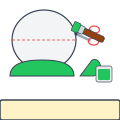
Make the Body
Cut a paper plate in half, paint it green. Cut a head and neck from the other half.
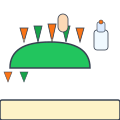
Add the Back Plates
Cut small triangles, paint them, and glue in a row along the dinosaur's back.
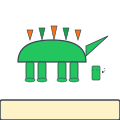
Add Legs and Tail
Cut four stubby legs with tabs, glue under the body. Add a long triangular tail.
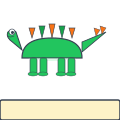
Add the Face
Glue the head to the front, add a googly eye, draw a smile, and add tail spikes!
What You’ll Create
A prehistoric beast from the craft cupboard! 🦕 Your little palaeontologists will transform paper plates into a stegosaurus by cutting one plate in half for the body, adding triangular plate spikes along the back, legs from folded paper, and painting the whole thing in dino-green. A roaring success that stands up on its own!
Have fun!
- 🦖 Make different dinosaur species — T-Rex (big head, tiny arms), triceratops (plate face shield)!
- 🌋 Create a volcanic backdrop from painted paper for a Jurassic scene!
- 📖 Research your dinosaur’s real size, diet, and era — add a fact card!
- 🦴 Make a dinosaur skeleton version using white paper strips on black paper!
Why It’s Amazing
Palaeontology: Building specific dinosaur species teaches scientific observation, species identification, and prehistoric knowledge. 🦕
Standing Structures: Making a 3D creature that stands up teaches balance, centre of gravity, and structural stability. 🔬
Scale and Proportion: Getting the head, body, legs, and tail in the right proportions develops visual-spatial reasoning. 📐
Fine Motor Skills: Cutting curves, folding tabs, and precise gluing all build dexterity and hand control. ✋
Pro Tips
For ages 3–5: Pre-cut all the shapes. Let them paint and glue everything together. The standing-up moment when the legs are attached is pure magic!
For ages 5–8: Let them cut their own shapes. Show them how to fold tabs for sturdy leg attachment. Challenge them to make the dinosaur stand without falling over.
For ages 8–12: Research stegosaurus anatomy accurately — 17 back plates, four tail spikes, tiny head relative to body. Try making articulated joints with brass fasteners so the neck and tail can move. Create a museum-style display card with species name, size, diet, and era.
Secret Pro Move: Before gluing the legs, slightly bend the paper plate body into a gentle curve (squeezing the edges together) — this gives the dinosaur a rounded 3D body shape instead of being flat, making it look much more realistic! 🎯