Indoor activity
Aeronautical Engineers: Paper Helicopters
Design, build, and test your very own fleet of paper helicopters. Discover how modifying the blade length and adding weight changes their flight and spin rate.
Materials
- Paper
- Paper Clips
- Ruler
- Scissors
Illustrated Steps
Draft the Blueprint
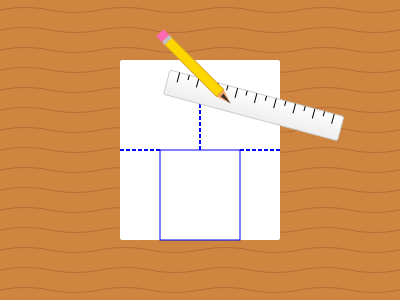
Use your ruler to draw a rectangle about 20cm long and 5cm wide. Draw a line down the middle of the top half for the blades, and two small horizontal slits halfway down the sides.
Cut and Fold
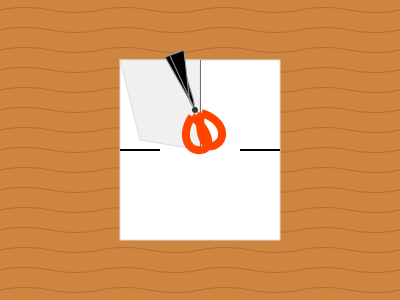
Carefully cut along the lines to create the two blades. Fold the bottom side flaps inwards to create the stem, and fold the two top blades in opposite directions.
Add the Weight
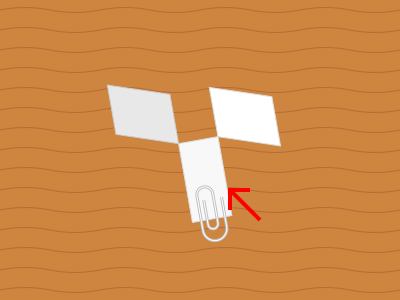
Attach a paper clip to the bottom of the stem. This weight is crucial for keeping your helicopter upright as it falls.
Test Flight!
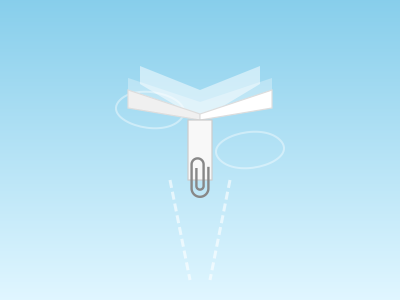
Hold your helicopter high in the air and drop it! Watch as it begins to spin rapidly on its way to the ground. Now experiment with modifications!
What You’ll Create
Get ready to transform simple sheets of paper into spinning, twirling helicopters! You’ll create several different designs to learn about aerodynamics and gravity as you drop them from high places.
Have fun!
Experiment by cutting longer or shorter blades, or folding the blades in different directions. What happens if you add two paper clips instead of one? Challenge your family to a ‘slowest descent’ race!
Why It’s Amazing
This simple activity introduces core concepts of physics and aeronautical engineering. The air pushes up against the blades, causing them to bend and spin, creating air resistance (drag) that slows the helicopter’s fall.
Pro Tips
Use different colours of paper for different designs so you can easily track which one performs the best. Try using cardstock vs printer paper to see how the material’s weight affects the flight.