Indoor activity
Paper Cup Anemometer
Attach paper cups to straws on a pencil pivot to build a spinning wind-speed measurer — then take it outside to test!
Materials
- Markers
- Paper Cups
- Pen
- Scissors
- Straws
- Tape
Illustrated Steps
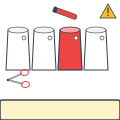
Prepare the Cups
Poke a hole near the rim of each of four paper cups. Colour one cup as a marker.
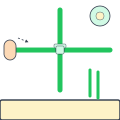
Build the Cross
Push two straws through each other at the midpoint to form a plus-sign cross.
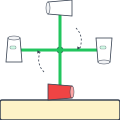
Attach the Cups
Push straw ends through cup holes and tape inside. All cups face the same direction!
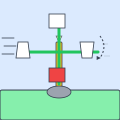
Add Pivot and Test
Push a pencil through the centre as a pivot, hold it up in the wind, and count spins!
What You’ll Create
Your own weather instrument! 🌬️ Your little meteorologists will build a real working anemometer (wind-speed measurer) by attaching paper cups to straws that cross through a central pivot. Take it outside and watch the cups catch the wind and spin — count the rotations to measure wind speed just like real weather stations do!
Have fun!
- 📊 Make a wind diary — measure the wind speed at the same time each day for a week!
- 🏃 Run with your anemometer and watch it spin faster — you’re making your own wind!
- 🎨 Decorate the cups in different colours so the spinning creates a colour blur!
- 📻 Check your readings against a real weather forecast — how close were you?
Why It’s Amazing
Meteorology: Building a real weather instrument teaches how wind speed is measured and why it matters for weather forecasting. 🌤️
Physics of Motion: Watching cups catch wind and convert it to rotational motion demonstrates force, drag, and energy transfer. ⚡
Data Collection: Counting spins and recording results over time introduces scientific measurement and data analysis skills. 📊
Engineering Design: Getting all cups to face the same direction and balancing the cross teaches careful assembly and troubleshooting. 🔧
Pro Tips
For ages 3–5: Adults should build the cross and poke holes. Let kids attach cups with tape, colour the marker cup, and hold the anemometer in the wind. Counting spins together is great maths practice!
For ages 5–8: Let them do most of the assembly with supervision for hole-poking. Create a simple wind scale: 0–5 spins = calm, 5–15 = breezy, 15+ = windy. Record readings in a notebook.
For ages 8–12: Build a proper wind-speed scale by calibrating against known conditions. Add a base that holds the anemometer upright. Research the Beaufort Scale and map your spin counts to it. Compare readings from different locations (open field vs. sheltered garden).
Secret Pro Move: Use a sharp pencil as the pivot and push it through a small bead before inserting through the straw cross — the bead acts as a bearing and lets the anemometer spin much more freely and accurately! 🎯