Indoor activity
Origami Animal Fold
Fold a paper zoo from single sheets — no scissors, no glue! Master the classic crane, a jumping frog, and a snapping fox using precise origami techniques.
Materials
- Colouring Pencils
- Markers
- Paper
Illustrated Steps
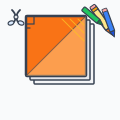
Choose and Prepare Your Paper
Cut paper into perfect squares and colour one side with colouring pencils so the finished animal shows colour on the outside.
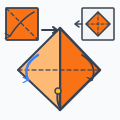
Fold the Base Shape
Fold into the bird base: square to triangle, then open-and-squash each flap. Crease every fold sharply with your thumbnail.
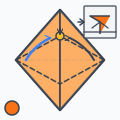
Shape Into Your Animal
Follow the step sequence for your chosen creature. Take it slowly — each crease is permanent. The animal reveals itself near the end.
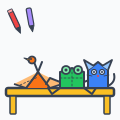
Display Your Zoo
Arrange finished animals on a shelf. Add tiny eyes and spots with markers. Try folding the same model three times — watch yourself improve!
What You’ll Create
A whole paper zoo! 🐦 Using just paper and precise folds, you’ll create origami animals — a soaring crane, a jumping frog, and a barking fox. Each creature is folded from a single square sheet with zero cuts and zero glue. The magic is entirely in the folding.
Have fun!
- 📸 Photograph your zoo from above for a bird’s-eye view
- 🎁 Fold an origami box and hide a small gift inside it
- 🐸 Make the jumping frog and race it across the table with a flick
- ⏱️ Time yourself — can you fold a crane in under five minutes?
Why It’s Amazing
- Spatial Reasoning: Following 3D fold sequences trains the brain to visualise shape and space. 🧠
- Patience and Focus: Each precise crease demands sustained concentration — great training for longer tasks. 🎯
- Mathematical Thinking: Symmetry, fractions, and geometry appear naturally in every fold. 📐
- Fine Motor Skills: The precise pinching and creasing required builds impressive dexterity. ✂️
Pro Tips
For ages 8–10: Start with a simple model like the jumping frog (under 15 steps). Build confidence before attempting the crane.
For ages 10–12: Try “modular origami” — fold 30 identical units and lock them together into a 3D star ball with no glue!
Free printable step-by-step origami diagrams for every level are available at most public libraries or via a quick online search.