Indoor activity
Newspaper Collage Art
Tear and cut newspaper into shapes, then layer and glue them onto paper to create textured collage artwork — animals, landscapes, or abstract designs!
Materials
- Flat Paintbrush
- Markers optional
- Newspaper
- Paper
- PVA Glue
- Scissors
Illustrated Steps
Prepare the Newspaper
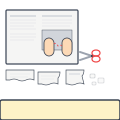
Tear and cut newspaper into strips, circles, and patches. Sort by size for your collage.
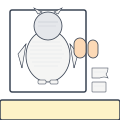
Plan Your Design
Lay newspaper pieces on paper to plan your design — an animal, landscape, or abstract pattern.
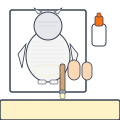
Glue It Down
Brush PVA glue on each piece and press onto the background, layering from bottom to top.
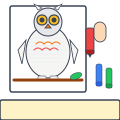
Add Details and Colour
Use markers or paint to add eyes, outlines, and splashes of colour over the newspaper texture.
What You’ll Create
Trash to treasure! 🗞️ Your young artists will discover that old newspaper is an incredible art material — tear, cut, scrunch, and layer it onto paper with PVA glue to create stunning textured collage artwork! The mix of printed text, photos, and white space creates a unique look that’s impossible to get with any other material. Make animals, landscapes, portraits, or abstract patterns!
Have fun!
- 🦉 Make a newspaper owl — scrunch pieces for a fluffy, feathered texture!
- 🌳 Create a tree with torn-strip bark and scrunched-ball leaf clusters!
- 🏙️ Build a cityscape skyline from straight-cut newspaper rectangles!
- 🎭 Make a self-portrait using different newspaper tones for light and shadow!
Why It’s Amazing
Sustainability Awareness: Reusing old newspapers teaches children about recycling and repurposing — art from waste is a powerful environmental lesson. ♻️
Texture and Composition: Working with torn paper teaches composition, layering, and how overlapping creates depth — foundational art skills. 🎨
Fine Motor Development: Tearing paper (not just cutting) uses a different pinch-and-pull motion that strengthens hand muscles in a unique way. ✋
Visual Problem-Solving: Choosing which newspaper sections to use — text columns for texture, photos for detail, white space for contrast — develops visual thinking. 🧠
Pro Tips
For ages 3–5: Pre-tear a variety of newspaper pieces for them. Let them focus on gluing and sticking — the layering and pressing is satisfying and builds hand strength. Simple shapes like a big circle sun or a house work perfectly.
For ages 5–8: Let them tear and cut their own pieces. Introduce the idea of using different newspaper sections for effect — headlines for bold areas, small text for texture, photos as feature elements. Show them how overlapping creates shadows and depth.
For ages 8–12: Challenge them to create recognisable images entirely from newspaper — portraits, animals, or scenes. Teach them to use the natural tones of newsprint (dark ink areas, grey, white margins) as a value scale. Introduce the work of artists who use collage like Picasso and Matisse.
Secret Pro Move: Water down PVA glue 50/50 and brush a thin layer over the entire finished collage — it dries clear and creates a sealed, slightly glossy finish that makes the artwork look professional and protects it! 🎯