Outdoor activity
Nature Paintbrushes
Collect leaves, twigs, flowers, and feathers from the garden, tie them to sticks to make wild paintbrushes, then create textured art!
Materials
- Fallen Leaves
- Paper
- Poster Paint
- String
- Tape optional
Illustrated Steps
Go on a Nature Hunt
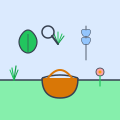
Collect leaves, feathers, twigs, grass, and flower heads from the garden — at least 6-8 different items!
Build Your Brushes
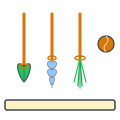
Tie nature items to sticks using string or tape — a leaf brush, a feather brush, a grass brush!
Set Up Your Painting Station
Pour different paint colours into shallow containers and lay out large sheets of paper.

Paint and Experiment!
Dip, sweep, dab, and stamp each nature brush. Compare the marks and layer textures!
What You’ll Create
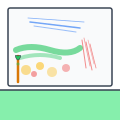
Forget boring brushes — paint with NATURE! 🌿 Your little artists will head into the garden to collect natural items — fallen leaves, feathers, twigs, flowers, grass, and pine needles — then tie them to sticks with string to create an entire set of wild nature paintbrushes. Each one makes completely different marks and textures when dipped in poster paint and swept across paper!
Have fun!
- 🖼️ Make a “texture gallery” — one stamp from each brush, labelled with what made it!
- 🎵 Paint to music — choose different brushes for different parts of the song!
- 🤔 Play “guess the brush” — cover your eyes and guess which nature brush someone used!
- 🌸 Press a painted flower onto paper to make a perfect botanical print!
Why It’s Amazing
Nature Connection: Collecting and examining natural materials builds environmental awareness and observation skills. 🌍
Texture Exploration: Each brush creates unique marks, teaching children about texture, pattern, and how tools shape art. 🎨
Creative Thinking: Using unconventional tools forces children to experiment and think differently about art-making. 💡
Sensory Experience: The combination of outdoor collecting and messy painting provides rich tactile and visual stimulation. 🤲
Pro Tips
For ages 3–5: Collect items together and pre-make the brushes. Focus on the sensory experience — dabbing, swooshing, stamping. Use big paper (wallpaper offcuts are perfect) so accuracy doesn’t matter.
For ages 5–8: Let them build their own brushes and predict what marks each will make before trying. Challenge them to create a picture using only nature brushes — no regular brushes allowed!
For ages 8–12: Introduce the concept of mixed media — combine nature brush painting with regular painting, collage, and drawing. Challenge them to recreate a famous painting style (impressionism works brilliantly!) using only nature brushes. Discuss how different cultures use natural tools in art.
Secret Pro Move: Try painting with the natural items directly — drag a pinecone through paint, roll an apple across the page, or stamp with a halved cabbage. The results are spectacular and completely unpredictable! 🌽