Outdoor activity
Nature Detective Lab
Transform your child into a real field scientist — collect specimens, sketch findings, and record discoveries in a nature journal exploring the backyard or local park.
Materials
- Magnifying Glass
- Markers
- Notebook
- Paper
- Pen
- Small Containers
- Stickers
- Tape
Illustrated Steps
Make Your Notebook
Write 'NATURE DETECTIVE LAB' on the cover and divide the inside into labelled sections: Insects, Plants, Rocks, Animal Clues, and Discoveries.

Pack Your Kit
Gather your magnifying glass, small containers, notebook, pen, and stickers for marking finds — everything goes in a bag as your official detective kit.

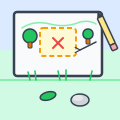
Pick Your Zone
Choose one small area — a corner of the garden or a patch of park — and sketch a rough boundary map so you study it deeply rather than rushing around.
Label Your Containers
Line up your small containers and label each one: Leaves, Petals, Rocks, Seeds. Only collect fallen items — observe living creatures and release them.

Draw Observation Sheets
Create recording sheets with boxes for: What did I find? Colour? Texture? Where? These official forms make every discovery feel genuinely scientific.

What You’ll Create
Transform into a REAL SCIENTIST and create your very own outdoor research laboratory! 🔬🌿 You’ll become a Nature Detective, exploring your backyard, local park, or even just the sidewalk outside, collecting fascinating specimens, making important discoveries, and recording your findings like a true professional researcher. This is YOUR chance to unlock the mysteries of the natural world right outside your door! 🐛🍃✨
Have Fun!
🔍 The Magnifying Glass Challenge: Use your Magnifying Glass to examine TINY details! Look at the veins in a leaf, the texture of bark, or the pattern on a pebble. Draw what you see in extreme close-up - you’ll be amazed at the hidden worlds you discover!
📸 Create a Field Guide: Draw detailed pictures of everything you find in your Notebook. Try to identify plants and insects using the shapes, colors, and patterns you observe. You’re making your very own nature encyclopedia!
🎨 Nature Detective Art: Make leaf rubbings by placing Paper over leaves and rubbing gently with the side of your Pen or Markers. The beautiful patterns will appear like magic! Collect different textures!
🏆 Discovery Achievements: Give yourself Stickers for special achievements: “Found 5 different leaves!” “Spotted an insect!” “Discovered something purple!” Stick them in your Notebook to track your accomplishments!
🌦️ Weather Detective: Record the weather in your Notebook - is it sunny, cloudy, windy? Real scientists always note environmental conditions! Check how the same spot changes in different weather!
Why It’s Amazing
Scientific Thinking: Children learn to observe carefully, ask questions, make predictions, and record data - the exact same process that professional scientists use every single day! 🧪
Attention to Detail: Using the Magnifying Glass trains kids to notice small details and patterns they’d normally overlook, developing crucial observation and focus skills! 👁️
Connection with Nature: Regular outdoor exploration builds environmental awareness, respect for living things, and a lifelong appreciation for the natural world around us! 🌍
Writing & Documentation: Recording findings practices handwriting, descriptive language, and organizational skills while giving children a sense of pride in their scientific work! ✍️
Pro Tips
For Ages 5-6: Focus on collecting and sorting by obvious features like color or size. Help them describe what they see using simple words. Celebrate every discovery with enthusiasm!
For Ages 6-8: Encourage more detailed observations. Ask questions like “Why do you think this leaf has holes?” or “What might have made this mark?” Introduce simple scientific vocabulary like “specimen,” “habitat,” and “texture.”
Seasonal Science: Return to the exact same research zone in different seasons and record how it changes! This teaches about seasonal cycles and long-term scientific observation. Your Notebook becomes a yearly record!
Safety Reminder: Always supervise outdoor exploration. Teach children to observe insects and plants without touching unless you’ve identified them as safe. The Magnifying Glass lets them see everything up close without risk! 🛡️