Outdoor activity
Leaf Print Art
Collect leaves from outside, coat them in paint, and press them onto paper to reveal stunning vein patterns — nature's own fingerprint transferred to your page!
Materials
- Fallen Leaves
- Flat Paintbrush
- Markers optional
- Paper
- Poster Paint
Illustrated Steps
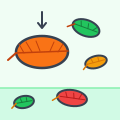
Collect Your Leaves
Gather 6–10 fallen leaves of different shapes and sizes. Choose fresh, flat leaves — not dry and crumbling — for the crispest prints.
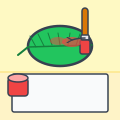
Coat the Leaf With Paint
Lay a leaf vein-side up and use a flat paintbrush to apply a thin, even coat of poster paint. Thin coats give the sharpest vein detail.
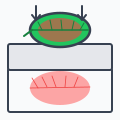
Press and Reveal
Press the painted leaf face-down onto paper, cover with a scrap sheet, and press firmly all over. Peel the scrap sheet, then lift the leaf slowly.
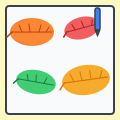
Arrange Your Gallery
When dry, arrange prints into a collage. Overlap colours, add marker stems and grass, and create a finished nature artwork.
What You’ll Create
A stunning gallery of nature prints! 🍂 You’ll collect fallen leaves from outside, coat them in poster paint, then press them firmly onto paper to transfer their beautiful vein and lobe patterns. Every single print is unique — nature’s own fingerprint!
Have fun!
- 🌈 Apply three colours to one leaf for a tie-dye rainbow effect
- 🦋 Fold a freshly pressed print in half while still wet for a symmetrical butterfly
- 🖼️ Create a four-seasons series — different paint colours for each season
- 🔍 Use a magnifying glass to study the vein patterns before you print them
Why It’s Amazing
- Nature Connection: Close observation of leaves builds genuine appreciation for the natural world. 🌿
- Science: Children discover leaf structures — veins, midribs, and margins — through the act of art. 🔬
- Colour Mixing: Overlapping prints introduces layering and secondary colour creation naturally. 🎨
- Fine Motor Skills: Controlled brush strokes and careful peeling develop precision and patience. ✂️
Pro Tips
For ages 3–5: Use thick, sturdy leaves — they’re easier for small hands to press. Pre-coat the leaves yourself so they focus on the pressing and reveal.
For ages 5–8: Try the same leaf in three different colours and compare which gives the sharpest result. Discuss why the results differ.
Cheap poster paint works best — if it dries too quickly before you can press, add a tiny drop of water to keep it workable.