Indoor activity
Fingerprint Bug Garden
Press fingertips into paint to stamp colourful bug bodies, then add legs, wings, and antennae with markers — grow a whole garden full of tiny creatures!
Materials
- Markers
- Paper
- Pen optional
- Poster Paint
- Small Containers
Illustrated Steps
Set Up Your Paint Palette
Squirt small blobs of three or four poster paint colours into separate sections of a container lid. Press your fingertip gently into one colour to test — you want enough paint for a clear print without smudging.

Press Your Bug Bodies
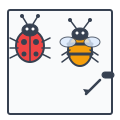
A thumbprint makes a fat bumblebee; four prints in a row make a caterpillar; two prints side by side make butterfly wings. Press firmly onto paper and hold for two seconds before lifting straight up.

Add Bug Details
Let the paint dry for five minutes, then use a marker or pen to add six spindly legs on every bug, two curly antennae, black spots on ladybirds, wing outlines on butterflies, and a tiny face on each one.
Create the Garden Scene
Draw the world around your bugs: tall grass, flower heads on stems, a sunshine, clouds, and a winding path. Give your garden a name at the top — this is YOUR garden, alive with tiny creatures!

What You’ll Create
Your own fingertips are the stamps — press them into poster paint and dab onto paper to make the bodies of ladybirds, bumblebees, caterpillars, and butterflies! 🐞🦋 Then grab your markers to add legs, wings, spots, and faces. By the end you’ll have a whole buzzing garden alive with dozens of tiny creatures — each one unique to you.
Have fun!
- 🐛 Use a whole line of 8 fingerprints for a giant rainbow caterpillar!
- 🎨 Dip the side of your little finger (not the tip) to make a longer, oval shape for butterfly wings.
- 🦋 Make matching bugs with a friend and see whose garden has more creatures.
- 🌈 Create a nighttime garden with black paper and light-coloured paints — fireflies and glowing moths!
Why It’s Amazing
- Scientific Observation: Children learn how real insects look — six legs, two antennae, three body segments — by having to draw them accurately. 🔬
- Fine Motor Skills: Pressing with consistent pressure, then making tiny controlled strokes for legs and antennae, develops the precise hand muscles needed for writing. ✍️
- Creativity: Every fingerprint is unique — this activity proves that each child’s marks are literally one of a kind. 🌟
- Nature Connection: Identifying different insects and recreating them on paper builds curiosity and respect for the natural world. 🌿
Pro Tips
For ages 3–5: Focus on one type of bug (ladybirds work brilliantly!) and draw the legs for them so they can focus on the satisfying stamping. Celebrate every single print!
For ages 5–8: Challenge them to make every standard bug correct — exactly six legs, exactly two antennae. Introduce the word ‘insect’ and what makes something an insect vs. a spider.
For ages 8–12: Research the life cycle of a butterfly or bee and add a lifecycle diagram alongside the garden — egg, larva, pupa, adult — using fingerprints for each stage.