Outdoor activity
DIY Weather Station
Build a working rain gauge and wind vane from household materials, then record the weather like a real meteorologist every single day for two weeks!
Materials
- Markers
- Notebook
- Paper
- Pen
- Ruler
- Scissors
- Small Containers
- Straws
- Tape
Illustrated Steps
Build the Rain Gauge
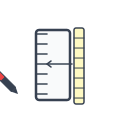
Mark a centimetre scale up the side of a straight-sided container using a ruler and waterproof marker. Number each line from 0 at the bottom. Place outside away from overhangs.
Make the Wind Vane
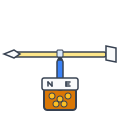
Tape a paper arrowhead to one end of a straw and a tail fin to the other. Balance on a pen tip to find the pivot point. Stand the pen in a stone-filled container, oriented with compass points.
Create Your Weather Log
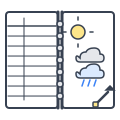
Draw a 14-day log table in your notebook with columns for date, cloud type, rain amount, wind direction, and wind strength. Add a cloud symbol key for quick daily recording.
Take Your First Reading
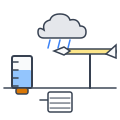
Go outside at the same time each day. Read and empty the rain gauge, observe the wind vane, note cloud types, and log everything. After 7 days, look for weather patterns!
What You’ll Create
You’ll build a real working weather station 🌦️ — a rain gauge that measures rainfall to the nearest centimetre and a wind vane that shows which direction the wind blows! Set both instruments outside, then start filling in your daily meteorologist’s notebook with observations. After a week, you’ll spot real weather patterns in your own data. This is exactly how professional weather scientists work! 🌤️
Have fun!
- 📡 Compare your daily readings against an online weather forecast — how accurate were you?
- 📊 After 2 weeks, draw a bar chart of your daily rainfall totals
- 🌡️ Add a thermometer to your station and record daily high temperatures
- 🧭 Research the Beaufort wind scale and try to estimate wind strength by observation
- 🌦️ After a month, can you predict tomorrow’s weather from today’s data?
Why It’s Amazing
- Scientific Method: Measuring, recording, and interpreting data is exactly how real scientists work — your child IS a scientist! 🔬
- Geography and Climate: Learning compass points and wind direction patterns connects science to geography. 🧭
- Data Skills: Reading a measurement scale, averaging readings, and drawing bar charts builds core maths skills. 📊
- Patience and Consistency: Maintaining a daily observation routine over weeks builds focus, discipline, and long-term thinking. ⏱️
Pro Tips
For ages 8–10: Start with just the rain gauge — it’s satisfying after the first rainfall and very simple to read. Add the wind vane once the routine is established.
For ages 10–12: Introduce the Beaufort wind scale and challenge them to estimate wind force using the original descriptions (e.g., “leaves in constant motion = 3 Beaufort”).
⚠️ Adult Helper Needed to help secure the wind vane in an outdoor location and to set compass orientation correctly on the first day.