Indoor activity
DIY Jigsaw Puzzle
Draw a colourful picture on a sheet of paper, divide it into puzzle-shaped pieces with a ruler, cut them out, then challenge a friend or family member to put your masterpiece back together!
Materials
- Markers
- Paper
- Ruler
- Scissors
Illustrated Steps
Draw Your Picture
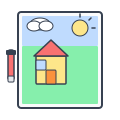
Fill a whole sheet of paper with a bold, colourful drawing — a landscape, cartoon, or scene. Colour it all the way to the edges.
Plan the Pieces
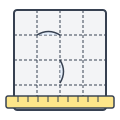
Flip the paper over and draw a 4×4 or 5×5 grid on the back with a ruler. Add rounded bumps and dips along each line to make interlocking tabs.
Cut Out the Pieces
Cut carefully along all the lines, rounding the bumps smoothly. Shuffle the pieces face-down once finished.

Solve It!
Turn all pieces face-up, mix them up, and reassemble your picture. Hand it to someone else for an extra challenge!
What You’ll Create
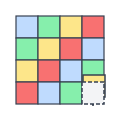
Design and build your very own custom jigsaw puzzle from scratch! 🧩 First you draw a picture, then divide it into interlocking puzzle pieces and cut them out. The result is a completely unique puzzle that you can solve yourself or hand to someone else as a personalised gift. The harder you make the cuts, the trickier the challenge!
Have fun!
- 🎁 Make a puzzle of a favourite drawing as a gift for a grandparent or friend.
- ⏱️ Time yourself solving it and try to beat your record each attempt.
- 🔢 Increase the grid size for a harder puzzle — a 6×6 gives 36 pieces!
- 🎨 Draw the same picture on cardboard for a sturdier puzzle that lasts longer.
Why It’s Amazing
- Spatial Reasoning: Assembling a jigsaw exercises the brain’s ability to rotate, match, and visualise shapes — a core maths and engineering skill. 🧠
- Artistic Expression: Designing the picture first means the child creates both the challenge and the art — a satisfying double win. 🎨
- Problem Solving: Working out which piece fits where (especially on a self-made puzzle with irregular bumps) builds logical thinking and patience. 🧩
- Fine Motor Skills: Cutting carefully along curved jigsaw-tab lines requires precise scissor control and steady hands. ✂️
Pro Tips
For ages 4–6: Draw a very simple picture (a sun, a house, a face) and use a 2×2 or 3×3 grid for just 4–9 large pieces. A grown-up can cut the pieces.
For ages 6–9: Let the child draw, grid, and cut independently. A 4×4 grid gives a satisfying challenge without being overwhelming.
For ages 9+: Try an irregular cut pattern instead of a grid — freehand curvy borders between pieces create a much trickier puzzle. You can also photograph a favourite image and print it on paper as the base. 🖨️