Indoor activity
Cotton-Bud Pointillism
Dip cotton buds in paint and build up beautiful pictures dot by dot — just like the famous pointillist painters!
Materials
- Cotton Buds
- Paper
- Paper Plates
- Pen optional
- Poster Paint
Illustrated Steps
Prepare Your Palette
Squirt blobs of poster paint onto a paper plate, spaced apart. Set out one fresh cotton bud per colour.

Sketch a Light Outline
Draw a faint pencil outline of your picture on the paper — keep it simple. This is your guide for dot placement.

Fill with Dots
Dip a cotton bud in paint and press straight down to make dots. Fill each area, alternating colours at borders for optical blending.

Build Up and Step Back
Layer extra dots for depth and shading. Step back 2 metres — the dots merge into smooth shapes and blended colours!
What You’ll Create
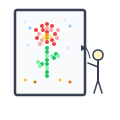
You’ll make a stunning pointillist painting using nothing but cotton buds and dots of colour! 🎨 Pointillism is a real art technique invented over 100 years ago — instead of brushstrokes, you build up an entire picture from tiny coloured dots placed side by side. From up close it looks like a mass of spots, but step back and a whole image appears. Try a simple rainbow, a flower, or a landscape!
Have fun!
- 🌸 Create a pointillist flower garden using only primary colours — watch secondary colours appear where dot colours overlap
- 🌅 Paint a sunset scene: rows of red, orange, yellow, and purple dots blending into each other
- 🔍 Ask someone to guess your picture first from far away, then from up close
- 🖼️ Try the same subject twice: once with big spaced dots and once with tiny tight dots — compare the results
Why It’s Amazing
- Art History: Children learn about pointillism and artists like Georges Seurat, connecting their craft to real art movements.
- Colour Theory: Placing dots of different colours side by side demonstrates optical mixing — the eye blends them at a distance.
- Patience & Focus: Building a picture dot by dot encourages sustained attention and careful, deliberate work.
- Fine Motor Skills: The repeated pressing motion strengthens hand muscles and develops the precise grip used in writing.
Pro Tips
For ages 3–5: Skip the outline — let them freestyle dot a whole page in rainbow colours. The magic is in discovering how dots fill space. Use chunky cotton buds or even fingertips for bigger dots.
For ages 5–8: Help them sketch a simple outline (rainbow, heart, star). Show them how to dip lightly for small dots and press harder for big ones. Introduce the idea of stepping back to see the “blended” effect.
For ages 8–12: Introduce the concept of optical mixing — place red and yellow dots side by side and observe the “orange” effect from distance. Challenge them to recreate a simple version of Seurat’s technique with a landscape scene.