Indoor activity
Cotton Ball Painting
Clip cotton balls into clothespins to make fluffy painting tools, then dab, swirl, and stamp colourful patterns onto paper!
Materials
- Clothespins
- Cotton Wool
- Paper
- Poster Paint
Illustrated Steps
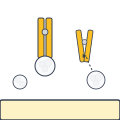
Make Your Cotton Ball Tools
Clip a cotton ball firmly into each clothespin to make fluffy painting tools — one per colour.
Set Up Your Paint Station
Squirt blobs of poster paint onto a plate and lay paper flat on the table.

Dab, Swirl, and Stamp
Dip cotton ball into paint and try different techniques — dab, drag, twist, and tap!

Create Your Masterpiece
Build up a picture with soft, fluffy textures. Let it dry and display proudly!
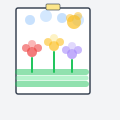
What You’ll Create
Forget the brushes — today we paint with clouds! ☁️ Your little artists will clip fluffy cotton wool balls into clothespins to create amazing textured painting tools. Dip them in poster paint and dab, swirl, stamp, and drag across paper to create beautiful soft-edged artwork that looks completely different from regular brush painting. Every mark is a surprise!
Have fun!
- 🌳 Dab green cotton balls for leafy trees and bushes — the texture is perfect for foliage!
- ❄️ Use white paint on dark paper for a snowy winter scene!
- 🐑 Make cotton ball stamp sheep — the fluffy texture is perfect for woolly bodies!
- 🎆 Drag outward from a centre point to make firework bursts!
Why It’s Amazing
Fine Motor Development: Squeezing clothespins strengthens the pincer grip — the same muscles needed for handwriting. ✋
Texture Exploration: Cotton balls create soft, blended marks that are totally different from brushes — children discover how tools change the art. 🔍
Creative Experimentation: With no “right way” to use a cotton ball, children freely explore dabbing, dragging, swirling, and stamping techniques. 🎭
Colour Mixing Discovery: When cotton balls pick up traces of previous colours, children see accidental colour mixing happen before their eyes. 🌈
Pro Tips
For ages 3–5: Pre-make the cotton ball tools and focus on the fun of stamping. Start with just 2–3 colours to keep it manageable. Encourage dabbing rather than dragging (less messy, more satisfying prints). Celebrate every mark!
For ages 5–8: Let them make their own tools and experiment with technique. Suggest making a picture using only cotton ball stamps — a garden, underwater scene, or fireworks display. Talk about texture and how it differs from brush painting.
For ages 8–12: Challenge them to recreate a painting style — impressionism works brilliantly with cotton balls! Try Claude Monet’s water lilies or a pointillist approach with tiny dabs. Discuss how different tools create different artistic effects.
Secret Pro Move: For extra texture variety, try different cotton ball sizes — pull a large ball apart for wispy, cloud-like marks, or squish it tight for denser stamps. You can also wrap cotton wool around the clothespin tip for an even finer tool! 🎨