Indoor activity
Colour Mixing Lab
Set up a kitchen colour science lab and discover how red, yellow, and blue combine to make every shade of the rainbow — plus the magic of oil and water!
Materials
- Food Colouring
- Paper
- Small Containers
- Vegetable Oil
Illustrated Steps
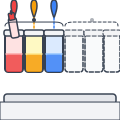
Set Up the Lab Stations
Fill three containers with water, adding red, blue, and yellow food colouring to one each. Leave three containers empty for mixing.
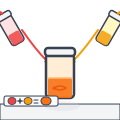
Mix the Primary Colours
Pour red into yellow, blue into yellow, red into blue. Name each new colour and press wet fingertips onto paper to record colour swatches.
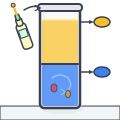
Discover the Rainbow Layers
Pour vegetable oil into a tall container, then add coloured water on top. Watch the layers form and swirl them gently.
What You’ll Create
A dazzling colour science lab on your kitchen table! 🌈 Using just food colouring, small containers, and vegetable oil, your little scientist will discover how primary colours combine to make new ones — and why oil and water stubbornly refuse to mix no matter how hard you try.
Have fun!
- 🔬 Mix all three primary colours together — what mysterious colour appears?
- 💧 Add drops of a second colour into the oil layer and watch them sink through
- 🌈 Can you make all six rainbow colours in a row of containers?
- 🎨 Dip a strip of paper into each colour and make a rainbow bookmark
Why It’s Amazing
- Early Science: Colour mixing is a child’s very first chemistry experiment — safe, simple, and magical! 🧪
- Colour Theory: Understanding primary and secondary colours underpins all art and design thinking. 🎨
- Observation Skills: Watching oil and water separate builds keen scientific curiosity and careful looking. 🔍
- Sensory Play: The visual impact of swirling colours is deeply calming and engaging for young children. 🌟
Pro Tips
For ages 3–4: Use just two colours at first. The moment red + blue = purple appears is pure magic — that’s enough for one session!
For ages 4–5: Introduce the names “primary” and “secondary” colours — children this age adore impressive vocabulary.
Protect the table with a plastic sheet or do this activity in the kitchen sink for completely stress-free clean-up!