Indoor activity
Clothespin Dragonfly
Turn a wooden clothespin into a beautiful dragonfly with shimmering tissue paper wings and googly eyes — clip it anywhere!
Materials
- Clothespins
- Googly Eyes
- Markers
- PVA Glue
- Scissors
- Tissue Paper
Illustrated Steps
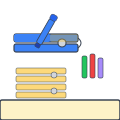
Colour the Body
Use markers to colour the wooden clothespin a bold, beautiful colour all over.
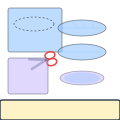
Cut the Wings
Cut two long, narrow oval wing shapes from tissue paper — about 8–10 cm each.
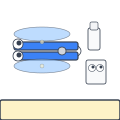
Attach Wings and Eyes
Glue tissue paper wings on top and stick googly eyes on the front end.
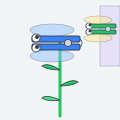
Clip and Display
Squeeze to open and clip your dragonfly to curtains, plants, or gift cards!
What You’ll Create
Bzzzz! 🦋 Your little entomologists will transform a wooden clothespin into a gorgeous dragonfly with stunning wings made from colourful tissue paper! Add googly eyes for personality, colour the body with markers, and your dragonfly is ready to clip onto curtains, plants, pencils, or anything it can grip. Make a whole swarm!
Have fun!
- 🌈 Make a rainbow set — one dragonfly in every colour of the rainbow!
- 🌿 Clip dragonflies to a branch in a vase for a nature display!
- 🦗 Make other bugs too — bees, ladybirds, butterflies — start an insect collection!
- 💌 Clip a dragonfly to a card or gift as a special decoration!
Why It’s Amazing
Entomology Introduction: Making a dragonfly teaches children about insect body structure — head, thorax, wings — through hands-on construction. 🔬
Delicate Handling: Working with thin tissue paper develops a gentle touch and fine motor precision that’s different from cutting thicker materials. ✋
Colour and Transparency: Layering tissue paper introduces the concept of translucency and how colours look when light passes through them. 🌈
Purposeful Craft: Making something functional (a clip) rather than just decorative teaches children that art can be useful too! 📎
Pro Tips
For ages 3–5: Pre-cut the wing shapes and focus on colouring and gluing. Show them real photos of dragonflies so they know what they’re making. The clothespin clipping action is great finger exercise too!
For ages 5–8: Let them cut their own wings and experiment with wing shapes. Talk about symmetry — both wings should match! Research how many wings real dragonflies have (four!) and try making accurate double-wing sets.
For ages 8–12: Challenge them to create anatomically detailed dragonflies — segmented bodies drawn with fine markers, four separate wings with vein patterns drawn in fine-point pen, and wire antennae from thin pipe cleaner pieces. Display them as a natural history collection!
Secret Pro Move: For wings that really shimmer, scrunch the tissue paper lightly before gluing — it creates a textured, iridescent effect that catches the light beautifully, just like real dragonfly wings! 🪽