Indoor activity
Cardboard Coin Sorter
Build a working coin sorting machine from a cardboard box with slots of different sizes — drop coins in the top and watch them sort themselves!
Materials
- Cardboard Boxes
- Coins
- Markers optional
- Ruler
- Scissors
- Tape
Illustrated Steps
Prepare the Box
Stand a shoebox on its side. Cut a cardboard ramp piece to fit diagonally inside.
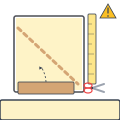
Cut the Sorting Slots
Measure your coins. Cut slots in the ramp — smallest first, each one slightly wider than its coin.
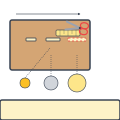
Assemble the Machine
Tape the ramp inside at an angle. Add dividers below to create compartments for each coin size.
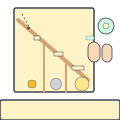
Test and Label
Drop coins in to test. Adjust slots that are too tight or wide. Label and decorate your machine!
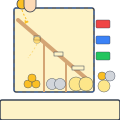
What You’ll Create
Ka-ching! 🪙 Your young engineers will build a real working coin sorting machine from a cardboard box! Cut slots of increasing size into a ramp inside the box — small coins fall through the first slot, medium coins through the second, and large coins roll to the end. Drop a handful of mixed coins in the top and watch them sort themselves by size. It’s like magic, but it’s engineering!
Have fun!
- 💰 Sort all the coins in the house — how much money is there in total?
- 🏦 Build a slot in the top to make it a combined sorter and piggy bank!
- 📊 Count how many of each coin type you have — make a bar chart!
- 🔬 Experiment with coins from different countries — will they sort correctly?
Why It’s Amazing
Engineering Design: Building a machine with moving parts that actually works is authentic engineering — designing, building, testing, and iterating. ⚙️
Measurement Skills: Measuring coin diameters precisely and cutting slots to match teaches practical measurement and the importance of accuracy. 📏
Maths Connection: Sorting, counting, and totalling coins naturally incorporates addition, multiplication, and understanding of monetary value. 🔢
Problem-Solving: When a coin gets stuck or goes to the wrong slot, troubleshooting develops critical thinking and patience. 🧠
Pro Tips
For ages 5–7: An adult should do the cutting. Let the child measure the coins with a ruler and help decide slot sizes. Focus on the excitement of testing — the moment a coin rolls and drops perfectly is incredibly satisfying!
For ages 7–10: Let them measure and mark the slots themselves. Guide them through the logic — why does the smallest slot come first? What happens if you put the biggest slot first? Discuss how real coin-counting machines work.
For ages 10–12: Challenge them to build a completely enclosed machine with only an input slot at the top and labelled output trays at the bottom. Can they add a coin counter mechanism? Research how banks sort millions of coins.
Secret Pro Move: Cover the ramp with smooth packing tape — coins will slide much more smoothly than on rough cardboard, making the sorting action faster and more reliable! 🎯